763.5K
Downloads
73
Episodes
The Dork-O-Motive Podcast hosted by Brian Lohnes is a research driven, story fueled, mechanically stoked look at the machines, people, and history that make up the modern mechanical world. Whether it's the stories of the men and women who have done amazing things in racing, the machines that roar around tracks and shape the Earth, or some bizarre mechanized history, Dork-O-Motive is here to bring you the story in a fun, well-researched, and informative way!
Episodes
Sunday Feb 07, 2021
Sunday Feb 07, 2021
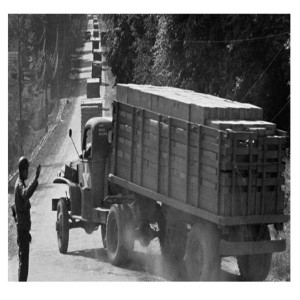
In July of 1944 the Allies had a problem. Having landed successfully in France and established a beachhead, they had been stalled for weeks. Thankfully a fortuitous victory over the Germans opened up the line and Allied troops roared across France, chasing the Nazis back to where they came from. This presented another problem.
With ports mangled, railroads destroyed, and all their stuff sitting on the beach war planners had to think fast to supply, feed, and fuel the armies fighting on the front lines. Their answer was one of the greatest single logistical feats in the history of war. They created the Red Ball Express and supplied multiple armies with more than 6,000 trucks working 24-hours a day on a closed loop highway system.
On this episode we tell the story of the Red Ball Express. How and why it was done, how it worked, how much stuff it managed to serve up, and why it was so key to the Allied successes in France during 1944. It is something that no other nation on Earth could have done at the time, but America did. This is an awesome story. Truckin' awesome if we may say so ourselves.
Monday Jan 11, 2021
Monday Jan 11, 2021
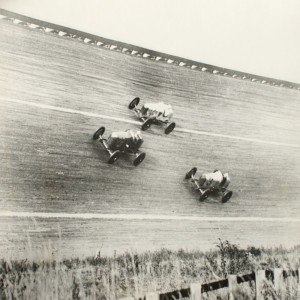
For a span of about 25 years in America, the fastest racing venues in the country were not made of asphalt, concrete, or brick, but rather wooden boards. These tracks, which ranged from less than a half mile to two miles in length were quick and cheap to construct and drew fans by the tens of thousands. They also birthed the first generation of hero American race drivers that the country had ever seen.
Unfortunately, it killed the drivers about as fast as it made them legendary. Even worse, with banking angles that sometimes approached 50-degrees or more, the tracks killed spectators as well when cars and motorcycles would fly into the stands. The Motordromes were then called "Murderdromes" by the newspapers of the day.
From coast to coast, the tracks sprang up and the speeds grew and grew. The performances from drivers and motorcyclists are still nearly beyond belief today!
This show tells the story of why the tracks were built, how the tracks were built, who built them, and why this bizarre racing supernova flashed so semingly fas t across the American racing landscape. This is this a story of suicidal speed and splinters. The story of American board track racing.
Wednesday Dec 30, 2020
Wednesday Dec 30, 2020
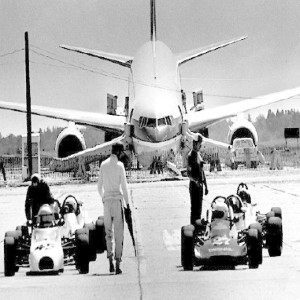
On July 23, 1983 a Canada Air 767 with 61 passengers and eight crew aboard ran out of fuel while flying over a remote area of Ontario, Canada at 41,000ft. The pilot and co-pilot were able to take the airplane and glide to to a harrowing but safe landing on a drag strip in Gimli, Manitoba, Canada. The outcome was less a miracle and more an amazing example of expert pilot work from Captain Robert Pearson and co-pilot Maurice Quintal. But how did this happen? How did a modern airliner run out of gas halfway through a flight? How did this impossible scenario come to pass?
A series of coincidental mistakes culminating with some bad math set the wheels in motion to produce the scenario that was and will forever be known as The Gimli Glider. This is the story about how some small breaks in communication, a mis-calculated math problem, and dauntless skill all combined to create one of the most fascinating stories in the history of modern aviation.
Think running out of gas in your car is annoying? Try it miles in the sky while trying to get hundreds of thousands of pounds safely to the ground!
Monday Nov 30, 2020
Monday Nov 30, 2020
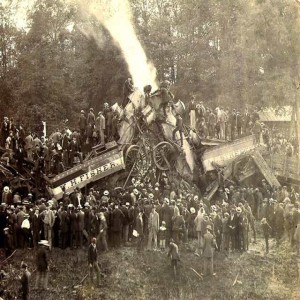
Between 1896 and 1935 a unique and bizarre series of spectator events occurred across America. Those events were the staged head-on collisions of steam locomotives done as profit making spectacles. Starting in earnest during September of 1896, there were hundreds of these wrecks completed with varying degrees of destruction, carnage, and human injury.
You may have heard of the "Crash at Crush" before but you likely don't know that Crush, Texas was not the first time this had been done. The famed wreck at Crush launched the practice into the national spotlight and proved that the huge undertakings could be as profitable as they were destructive.
In this podcast we examine the people, the places, and the things that lead to this very American activity becoming so popular and why it died a quiet death as a profit making enterprise in the middle 1930s. We tell the story of the times, the trains, and the consequences of taking tons of steam driven steel and iron and pitting it all against good sense and physics to make a dollar.
This is truly an odd tale of profit and performance art.
Monday Nov 23, 2020
Monday Nov 23, 2020
Bill Lear will go down as one of the most incredible inventors of the 20th century. The man who created the car radio, miniature tuning coils for radios, who invented auto-pilot, radio guidance for airplanes, and the basic automatic landing system that is still in refined use today he also invented the 8-track tape, and his biggest accomplishment, The Lear Jet.
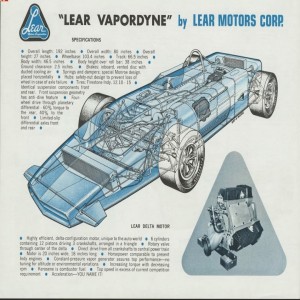
There is one area where he failed spectacularly at though. Bending the laws of physics. Later in life Lear became obsessed with steam engines and steam power to end pollution. He designed steam engines, and was planning on running the 1969 Indy 500 with a steam powered race car! It was a spectacular failure lead by a dubious English engineer who’s credentials fell far short of Lear’s. He would go on to create a working steam city bus among other things but the Indy 500 effort was really something.
Rich, eccentric, and seemingly unstoppable, the laws of nature ground Bill Lear to a halt and cost him the majority of the fortune he made in his life. This is the story, some of it in Lear’s own words, of how that happened.
Friday Nov 20, 2020
Friday Nov 20, 2020
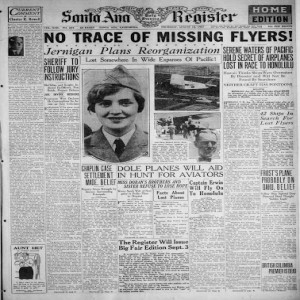
The 1927 Dole Air Race stands as one of the most bizarre and tragic events in the history of flight. Paid for by James Dole, the pineapple magnate, the race was designed to capitalize on the fame that came from Charles Lindbergh crossing the Atlantic on a solo flight. The twist was that the people in this race were to fly from Oakland, California to Hawaii.
15 airplanes entered the race and the death toll was nearly a dozen lives by the time the event concluded. The intersection of bravery, ignorance, fame, and the chase for big money all came to a head at this event and it helped to shape the future of American aviation.
Oh, it should be mentioned that the whole thing was rendered largely pointless just months and weeks before when multiple people completed the incredibly difficult flight across the Pacific ahead of the actual race.
Tuesday Oct 13, 2020
Tuesday Oct 13, 2020
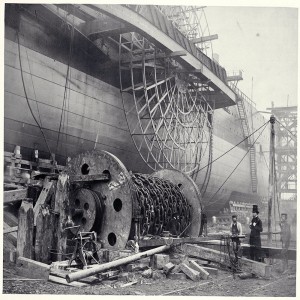
This is the story of one of the greatest engineering achievements of the Victorian Age. It is also the story of a ship so far ahead of its time it was one of the greatest financial failures ever accounted in the modern world. At the time of its construction in the 1850s, the massive SS Great Eastern was the largest moving man-made object on Earth and was five times larger than the next largest ship.
In a tale of steam-punk meets real life, learn how this 692ft long iron beast used sails, paddle wheels, and the largest single propellor ever placed on a ship to drain the bank accounts of its investors and eventually connect the world in a magical new way.
She held 10,000 tons of coal in her belly, had steam engines weighing 1,300 tons powering her, and had room for 4,000 passengers. It was all for naught. Learn the how's, the why's, and the who's of this amazing ship in this episode.
Monday Jun 29, 2020
Monday Jun 29, 2020
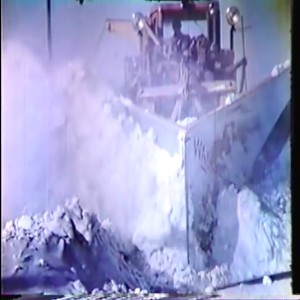
A couple of years ago, Buffalo got hammered with one of the all time record short term snowfall totals in American history. The seven feet of snow they got over the course of a day or two brought the city to a halt, brought the national guard out with as many machines as they can muster, and will long live in the lore of wild Buffalo lake effect weather. As brutal as this dumping on Buffalo was it looks like a minor inconvenience when compared to the disastrous winter that several midwestern/western states suffered during the end of 1948 and the beginning of 1949.
Blizzards and storms piled up one after the next until an area virtually the size of France, over 190,000 square miles was completely snowbound. Since this was rural country and many of the people suffering were farmers that had livestock, there was definite concern for their health and safety. The direness of their situation was recognized all the way at the top of the governmental food chain and the 5th Army was mobilized to help. They started moving men and equipment into the area and set forth clearing roads, opening up paths in fields and getting livestock food and shelter. The fear was so great for the cattle that the Air Force was actually used to air drop baled hay into fields to feed the beasts. Despite the best efforts there were big losses of life when it came to the animal population. There are lots of dead cows shown in the film (take note cow lovers!).
The operation commenced in earnest on January 29th, 1949 and was concluded on March 15th. At its height, more than 1,000 bulldozers were working at once to open roads, open fields, and free people from their icy bonds. Below you’ll find a link to the full government report that was written as a review of the operation by the 5th Army and the video from Allis Chalmers that documented the massive and valiant effort. It seems that some expense was laid out for this film as there is lots of ariel footage and a general feel of a decently budgeted production for the era.
This was not a quaint romp through the snow. 115,000 miles of roads were opened, over 6,000 people were working simultaneously at the peak of the operation, four million head of livestock were fed and effectively saved from certain death, more than 1.2 million people were directly helped by this effort, and the cubic yards of snow moved, removed, and otherwise relocated number in the 10s of millions. A total of six people working in the operation died as a result of accidents and/or exposure to the elements.
And that's what this episode is all about!
Wednesday Jun 24, 2020
Wednesday Jun 24, 2020
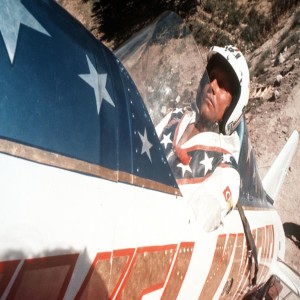
There was a time in America when the most famous person in the entire country was a lunatic with a motorcycle called Evel Knievel. His fame and his public bravery reached their outer limits on September 8, 1974 when Knievel tried to jump the Snake Rive Canyon in Idaho in what amounted to an unguided missile. The story of this jump, its promotion, and ultimate failure is something that will long live in American lore.
Through story telling, period text, and a load of period audio, you'll learn the story of this uniquely American event and how it all came unraveled long before Knievel pushed the fire button on his rocket. It was a defining moment in the career of Evel Knievel, a defining moment in America, and a story that's so insane with so many different twists and turns you likely won't believe it!
Thursday Jun 18, 2020
Thursday Jun 18, 2020
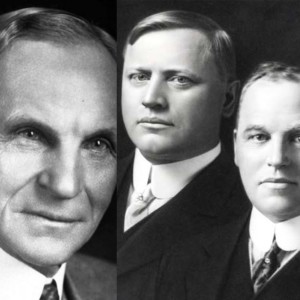
The story of how John and Horace Dodge helped get Henry Ford into business, made millions off of him, and then used his own profits to fund a competing car company is one of the most awesome in the history of the automobile. A very healthy business relationship devolved into an epic battle of ultra-wealthy guys trying to out maneuver each other in the courts and with money. There are clear winners and losers in this one and the fact that all of them, even the short-lived Dodge Brothers became wealthy beyond their wildest dreams is icing on the cake.
This is the story of how business was done 100 years ago and how even then, one man could not load an entire industrial colossus on his back and ignore his investors...even if those investors were using their own dividends to fund a company in the same business as they one they were profiting from.
The capitalists and industrialists of the early 20th century were not the nicest guys in the world but the were smart, tough, and in so many ways fearless. Here's the story of the the Dodge Brothers and Henry Ford went to war on a battlefield paved in gold.